
Travel Notes from Noepe or “Martha’s Vineyard”
by KIMBERLY MONROE
in Fall 2025
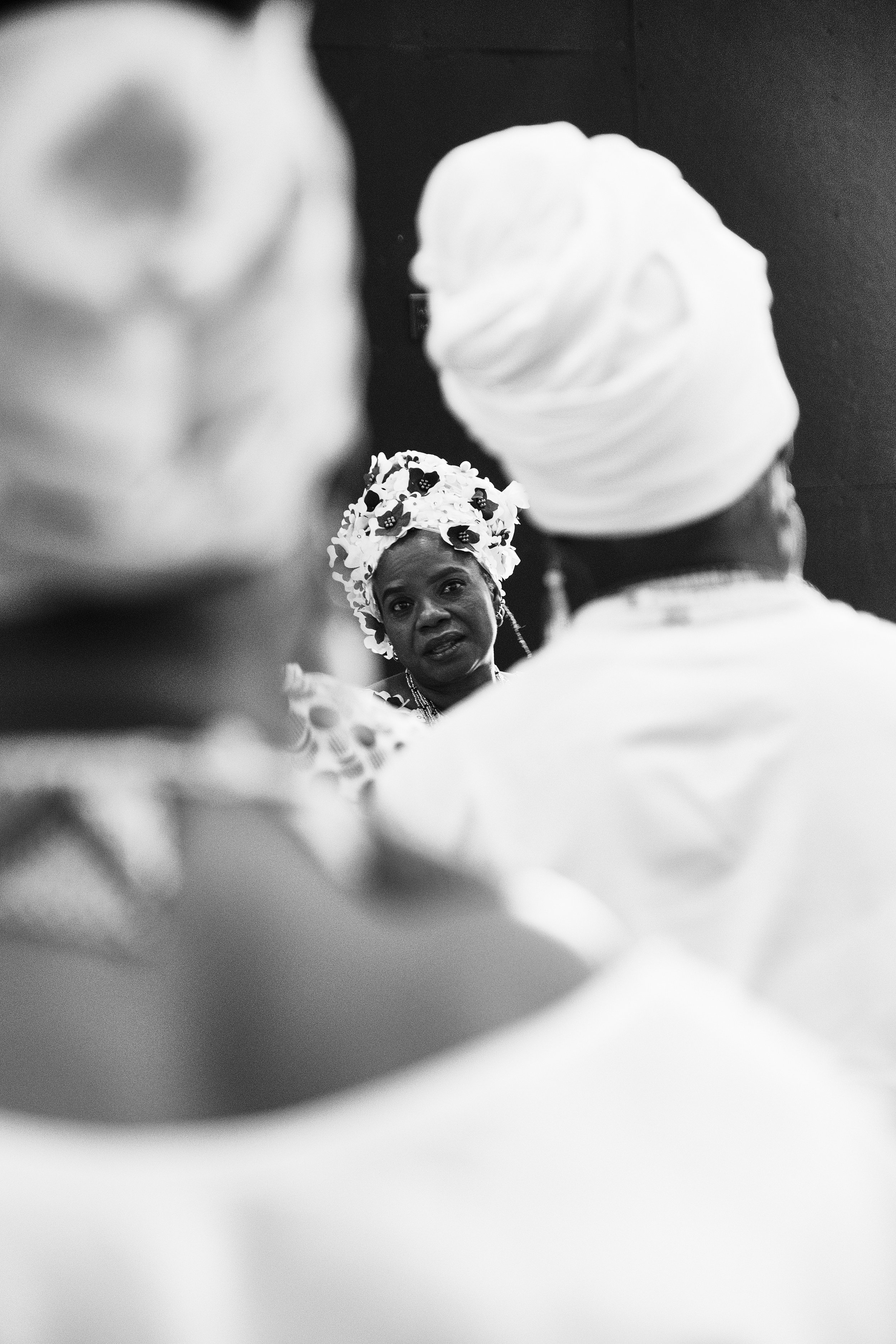
Tafari Melisizwe, “Untitled - New Orleans, LA,” 2019
Before there was a Martha’s Vineyard, there was Noepe. For thousands of years, the island we now know as Martha’s Vineyard was home to the Wampanoag people, who named it Noepe, meaning “land amid the waters.” Long before Black intellectuals, artists, and civil rights leaders found refuge there, Noepe was a site of deep ancestral knowledge, maritime skill, and cultural endurance. The Wampanoag stewarded the land, the water, and the rhythms of life across the island, establishing a relationship with place that was rooted not in ownership, but in belonging. Any account of Black life on Martha’s Vineyard, indeed, any American history rooted in land, must begin with this acknowledgment of Indigenous presence, persistence, and sovereignty.
It is within this layered geography, shaped first by the Wampanoag, later disrupted by colonization, and then reimagined through centuries of Black resilience, that the stories of Black women in Massachusetts unfold.
Massachusetts holds within its borders a quiet but profound history of Black perseverance, particularly shaped by the lives and legacies of Black women. From the freedom-seeking courage of Elizabeth Freeman in the Berkshires, to the literary grace of Dorothy West on the shores of Martha’s Vineyard, their stories reflect survival, vision, and a reclaiming of space in a state that has long served as a backdrop for both racial tension and Black empowerment.
Elizabeth Freeman, also known as Mumbet, made history in 1781 as the first enslaved person in Massachusetts to successfully sue for her freedom. Her case, rooted in the Massachusetts Constitution’s declaration that "all men are born free and equal," became a catalyst in the legal dismantling of slavery in the state. Freeman’s bold insistence on her humanity reminds us that Black women were central to the legal and moral reckoning around slavery, not just as subjects. They had some agency. Her case laid the foundation for the idea that freedom was not a gift from the state and was a right that could be demanded and won through intellect and persistence.
More than a century later, Dorothy West carved a different kind of path toward liberation through the written word. A child of the Harlem Renaissance, West found in Martha’s Vineyard a haven where she could write, reflect, and build community. Her novel The Living Is Easy peels back the layers of class, race, and womanhood, echoing the complicated tensions of Black identity that still resonate today. West was not alone in her retreat to the Vineyard. For generations, Oak Bluffs and surrounding areas became a sanctuary for Black writers, artists, and thinkers, many of them women, who gathered to build intellectual and cultural capital away from the white gaze.
Among those who made their way to the Vineyard was Maya Angelou, who, like West, understood that Black women needed spaces to breathe, to reflect, and to imagine new futures. Angelou’s presence added to the Vineyard’s lore as a site of Black utopia, where creativity could flourish unbounded by the weight of urban racial politics or Southern racial violence. The island became more than a retreat; it became a proving ground for rest as resistance. Angelou’s often-cited words describing Oak Bluffs as “a safe place where we can go as we are and not be questioned,” echo deeply among Black families who return to the Vineyard summer after summer. Though the exact origin of the quote is unclear, its sentiment resonates powerfully for many. For them, the Vineyard embodies that very ideal, a space of ease, familiarity, and belonging, where a certain Black identity is neither policed nor explained.
It was not only artists and writers who walked these shores. Civil rights leaders such as Malcolm X and Martin Luther King Jr. also visited Massachusetts and the Vineyard, both in search of respite and to strategize. Though they are often remembered for their speeches in Washington or Selma, their quiet moments in places like the Vineyard are just as important. They listened, reflected, and shared space with the women whose homes and conversations shaped their thought. Known as the “Summer White House,” the Overton House—also referred to as “Villa Rosa” by some families— holds a special place in Vineyard history. It is said to be where Dr. Martin Luther King Jr. penned portions of his iconic “I Have a Dream” speech. The house also hosted influential Black figures such as Malcolm X, Congressman Adam Clayton Powell Jr., and boxing legend Joe Louis during their visits to the island.
In the narratives of Eunice Matthews-Rocker, a Chappaquiddick and African woman, Freeman and West, Angelou and the unnamed matriarchs staying in Martha’s Vineyard, perhaps we see a geography transformed by Black presence. Massachusetts, often framed in terms of its colonial past and abolitionist reputation, becomes a living archive of Black womanhood in motion. Before Sojourner Truth, it is a place where freedom was first declared in a courtroom by a woman once enslaved, where literature shaped the national conscience, and where generations found a shoreline from which to dream.
These women and those who walked beside them, did not just inhabit Massachusetts. They helped define it. And in doing so, they reshaped our understanding of what freedom, rest, and power can look like.
The island features a wealth of Black historical landmarks, among them homes formerly owned by influential Black figures and featured in The Negro Motorist Greenbook. One of the island’s most cherished historical sites is Inkwell Beach. Its name carries a mix of origin stories, some say it comes from the dark seaweed that often washes ashore, resembling spilled ink. Others link it to the many writers of the Harlem Renaissance who visited the Vineyard, imagining them dipping their pens into metaphorical ink. But those who know the deeper history understand it was called the Inkwell because that’s where Black people swam. Once a term of exclusion, it has since been reclaimed and celebrated as a symbol of enduring Black presence and tradition on the island. That presence stretches back generations, long before summer vacations and seaside rituals, back to the era of enslavement. Many Africans who escaped bondage found refuge in Martha’s Vineyard, particularly in Aquinnah, where they were often protected by the Wampanoag people. Today, Inkwell Beach stands as a site of joy and community, and as a living testament to survival, resistance, and belonging.
That spirit of survival, healing and collective endurance is perhaps most powerfully embodied at Inkwell Beach in Oak Bluffs, where the Polar Bears—a multigenerational group of Black women, joined by some men—gather each summer at 7:30 am from the Fourth of July to Labor Day. The group was started by Black women and men workers in 1946. They began swimming in the mornings because of their work schedules, and the exercise component was added years later.
On the morning I joined, we walked into the ocean singing the Polar Bear version of “Wade in the Water.” We began not with movement, but with stillness: a collective acknowledgment of the Indigenous people of Noepe. It was a powerful gesture, one I hadn’t expected in a place often associated with Black elitism and summer resort tradition. Yet in that moment, the practice was grounding, reminding us that even when we practice our Black cultural traditions, we must honor the land’s original people. As the sun rose over the horizon, the elder Polar Bears swimmers swam over to greet us. We applauded as they arrived, honoring their years of discipline, their leadership, and then watched as they swam away, gracefully carving through the water. The rest of us stayed closer to the shore for the aerobics taught by Caroline Hunter, Brenda Davenport and other Black women. Over 300 of us entered the ocean together, seeking clarity, restoration, and connection. The experience was physical and spiritual. We were called to release negativity, to reflect on our shared humanity, and to recommit ourselves to being better, stronger, kinder, more rooted in purpose and service. Elders offered wisdom, newcomers were embraced, and everyone was reminded that healing is possible and is our responsibility. As we stood in the sacred waters of Noepe, facing the horizon, we left behind what no longer served us and stepped forward into a vision of ourselves renewed. It was beautiful, sacred, and Black. I was reminded of the old baptisms that took place in the rivers and lakes of South Louisiana and the spiritual baths of Ifa and many other traditions we’ve retained.
Black resorts like Highland Beach on the Chesapeake Bay, Sag Harbor on Long Island, and Oak Bluffs on Martha’s Vineyard each share a common origin story, communities that emerged in response to segregation, yet evolved into cherished havens of Black leisure, culture, and community. While all three hold historical significance, Oak Bluffs remains one of the most vibrant and enduring destinations, especially for those from the Northeast. What began as a necessary retreat in the face of exclusion became a gathering place, attracting generations of Black families, artists, professionals, and activists.
Black beaches and resorts emerged as political responses to exclusion, violence, and racial control. In a Jim Crow world where Black people were routinely barred from public pools, denied access to white-only beaches, and often prevented from purchasing property in many towns, the simple act of recreation became nearly impossible outside of spaces created and governed by Black communities. Freedman’s Beach, just outside Wilmington, North Carolina, where Assata Shakur spent time as a child, offered sanctuary for Black travelers in the 1950s. Similarly, frustrated by the denial of access to Carolina Beach, Frank and Lulu Hill invested their life savings to establish the Monte Carlo By The Sea, a resort that provided not only a restaurant but also lockers and changing rooms—ensuring that Black families could enjoy the seaside with dignity and safety.
But I couldn’t help but wonder, can everyone truly access this experience? Are these traditions and spaces open to all, or are they quietly gatekept? Even as Martha’s Vineyard becomes increasingly visible, through visits by the Obamas and other political figures, Netflix films, and even Ralph Lauren’s recent Oak Bluffs collection, there remains an unspoken narrative about who Black people are expected to be on the island in August. It’s telling, and at times, unsettling. While I felt conflicted about the layered dynamics of class, access, and belonging, I was also reminded of the many Black writers and civil rights leaders who once found themselves there. Perhaps they, too, came seeking the quiet and stillness. Perhaps they came to embrace the flood of Black presence each August, or maybe they came simply to see—and to be.
Even as class dynamics continue to shape who has access to certain spaces and circles, it leads me to consider whether, at the core, we’re all searching for the same thing, a sense of belonging, moments to gather together. Even within worlds built on privilege, there may still exist a quiet longing for acceptance, for affirmation, for home. Whatever the complexities, one truth remains, nothing should stand in the way of Black people experiencing joy, healing, and the full essence of being. Even if only for a summer, or a single week spent in rest, reflection, and renewal. But the reality is that many poor and working-class people may never experience that in their lifetime. I remain deeply grateful to my ancestors who made these small moments of peace possible, and for women like Dorothy West, Maya Angelou, Elizabeth Freeman and many more. The same waters that calmed them, the same soil that grounded and strengthened them, continue to offer us the chance to be made whole.
Kimberly F. Monroe, Ph.D. is a writer, cultural curator, and associate professor of Africana Studies based in Washington, DC. A native of South Louisiana, her work examines Black radical traditions, historical memory, and global liberation movements. Her recent writing has appeared in Picturing Black History, The Funambulist, La Créole, and Spirit House: A Crossroads Project with Princeton University. She is currently completing her manuscript, The Black Underground: Assata Shakur and Global Freedom Struggles.


